· By Kohout Jan
How to Build Consistency in Trading
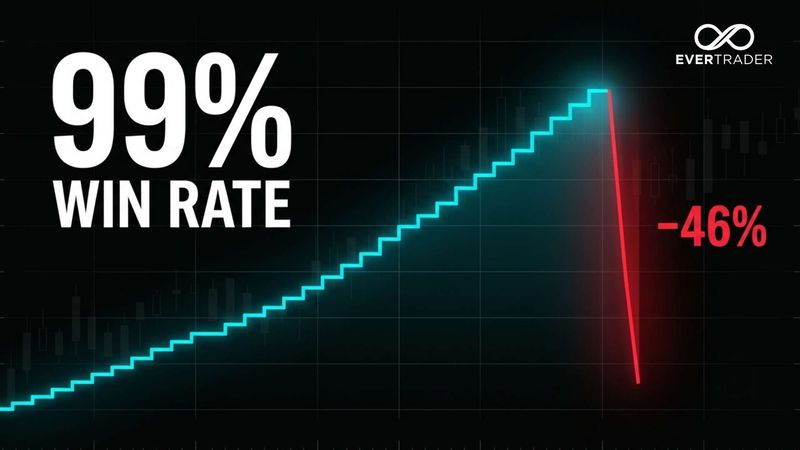
When you first dive into the world of prop trading, it’s easy to fall for the illusion of getting rich quick. Everywhere you see screenshots of profitable days, charts of meteoric rise and headlines like “I made 1000% in a week”. But the reality is different. Not sexy. Not viral. But sustainable.
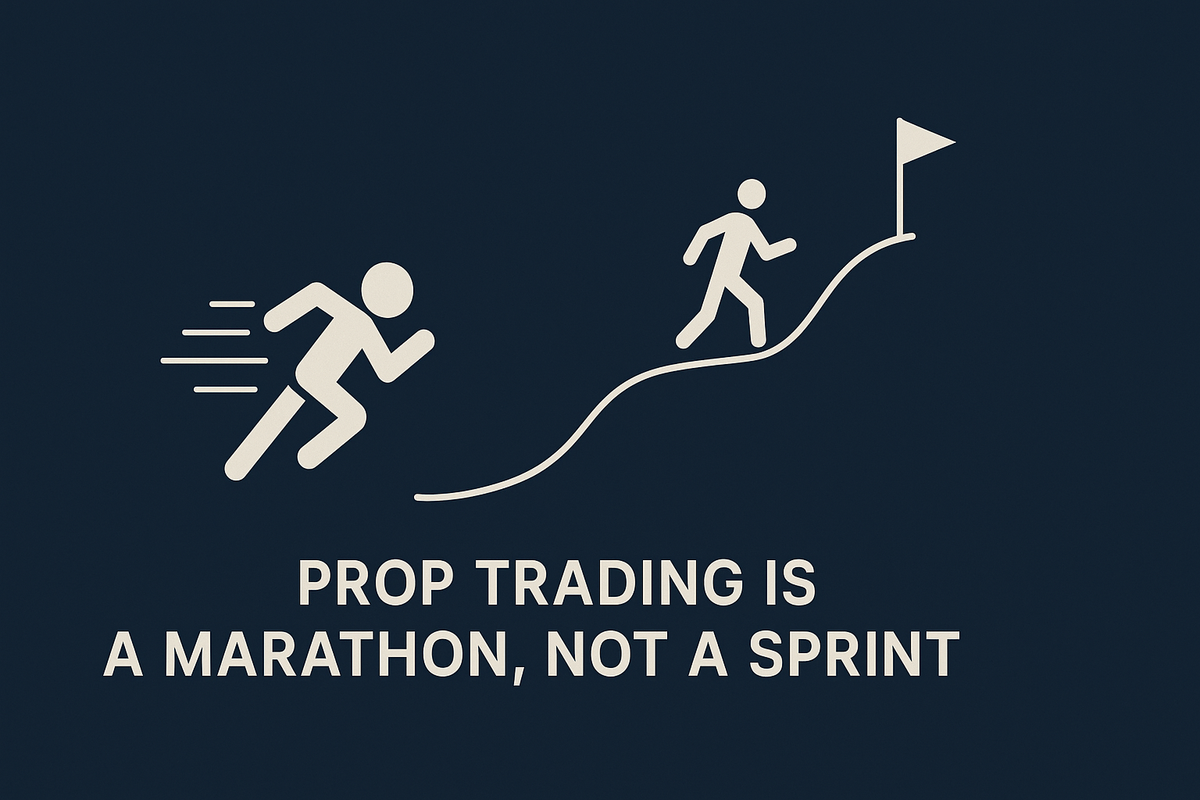
Prop trading is not a sprint. It’s a marathon.
And it is this change of mindset that decides who will stick with trading – and who will soon run away from it with a feeling of failure.
Chasing a quick profit: a recipe for frustration
Let’s start with what most newbies do.
- They feel the pressure to “pass the challenge quickly”.
- They enter based on emotion.
- They’re raising flights for profit.
- They ignore the plan because “it’s working now”.
The result? Inconsistent results. Rapid gains alternate with deep declines. And instead of steady growth comes frustration, fear and the feeling that “trading is probably not for me”.
Why is this happening?
Because most people only look at the result. How much they made today. But the real traders look at the process.
Consistency is not about being in the plus every day
This is a fundamental mistake. The goal is a solid plan, managed risk and long-term performance.
Consistency means:
- Trade only verified setups.
- Stick to your risk management.
- Don’t be swayed by a series of gains or losses.
- Spend time reviewing and journaling.
In other words – consistency means being every day the same disciplineeven when the outcome isn’t exactly as expected.
Consistency as a habit, not as a talent
The good news is that consistency is not something you are born with. It’s a skill. And like any other, it can be built – with tools, routine and a conscious approach.
Here are specific strategies to help you:
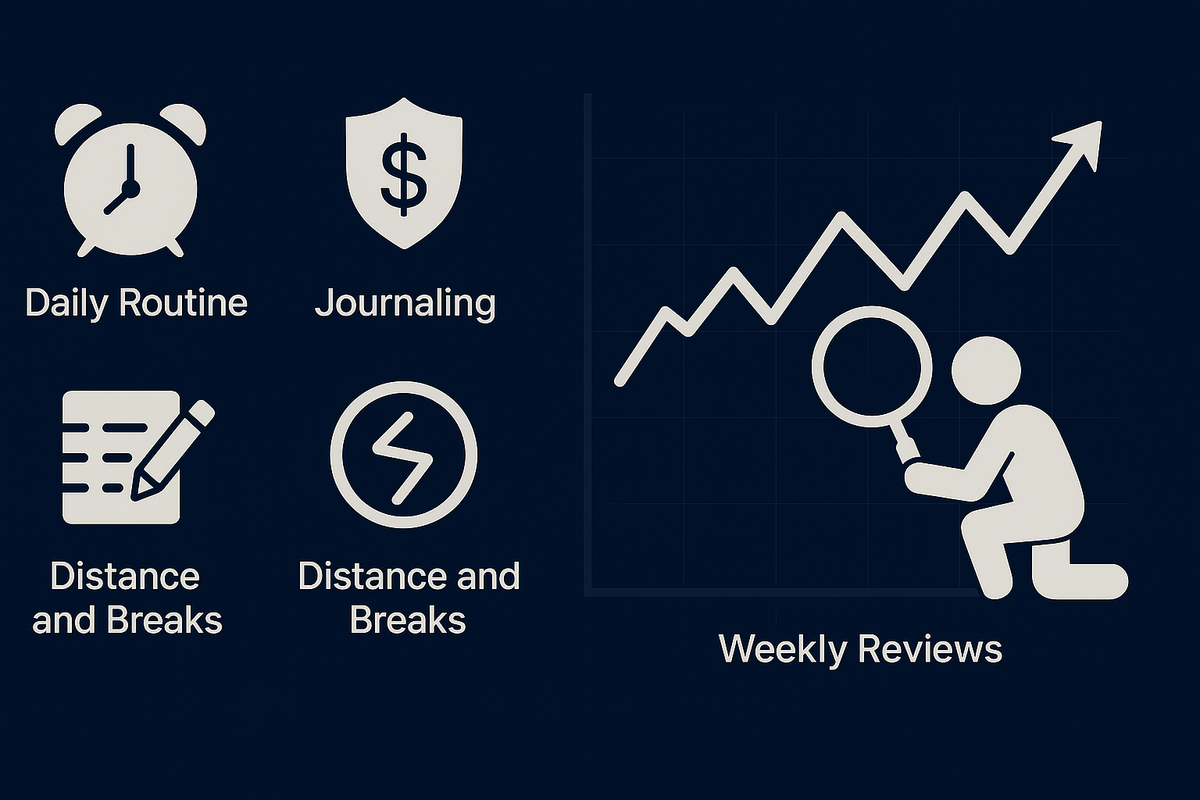
1. Daily routine
Trading is not about chance. It’s about the system.
- Get up at the same time.
- Watch the markets regularly, not “when the time is right”.
- Prepare for the day’s session – with analysis and a plan.
Routine will help you eliminate chaos. And with it, impulsive decisions.
2. Journaling
Take notes every trade. Not only in and out, but also:
- why you entered,
- how you felt,
- that worked,
- what you would have done differently.
In a few weeks you will see formulas that will help you grow faster than any course.
3. Risk management
This is basic. Without it, you’re just a gambler with a chart.
- Set a fixed risk per trade (e.g. 1%).
- Don’t raise it after you win – even if you’re tempted.
- Follow it even in losses – especially when.
This will keep you in the game.
4. Spacing and pauses
Losses and gains affect the psyche. After a few losing trades we tend to “catch up with the market”. After a series of wins, euphoria and overconfidence set in.
Both are dangerous.
Treat yourself mental reset – even if it means a day without charts.
5. Weekly review
Once a week, sit down and take a walk:
- trade statistics,
- errors,
- moments when you stuck to the plan,
- and most importantly: what worked.
This is your mirror. And every week is a chance to become a little bit better.
Why prop trading is the perfect place to build consistency
Perhaps surprisingly, it is the restrictions that “bind” you in prop trading that can help you the most:
- Exactly given risk and drawdown.
- Rules you must follow.
- Natural pressure for discipline.
All of this creates an environment where you have no choice but to trade professionally. And when you do, the reward is more capital and the feeling that you are really a trader – not just a lucky tryer.
Conclusion: be patient. It pays off.
It’s okay to want to make money. But don’t try to skip the learning phase. Tearing off a green apple is not an option either – it’ll turn sour.
Trading is the way to go. And consistency is what keeps you on it.
At EverTrader, we believe that with clear rules, support and an environment for growth, you can succeed. But you have to take it one step at a time.
That’s why we’ve made a new video blog on the subject – a calm, concrete and honest look at what it means to be “consistent” and how you can build your entire trading business around it.