· By Kohout Jan
How to monitor and improve your trading performance


There is a simple rule in trading: you can’t improve what you don’t measure. If you don’t have feedback, you have nothing to bounce back from – and without it, it’s hard to move forward. You may know the feeling: you untrade a few trades, make some gains, lose some losses… and then you don’t really know why. That’s why it’s crucial to start keeping a proper trading diary. In today’s article, we’ll look at what and how to write down, what metrics to track, and how to get the most out of your journal.

What to write down: not only numbers, but also head and heart
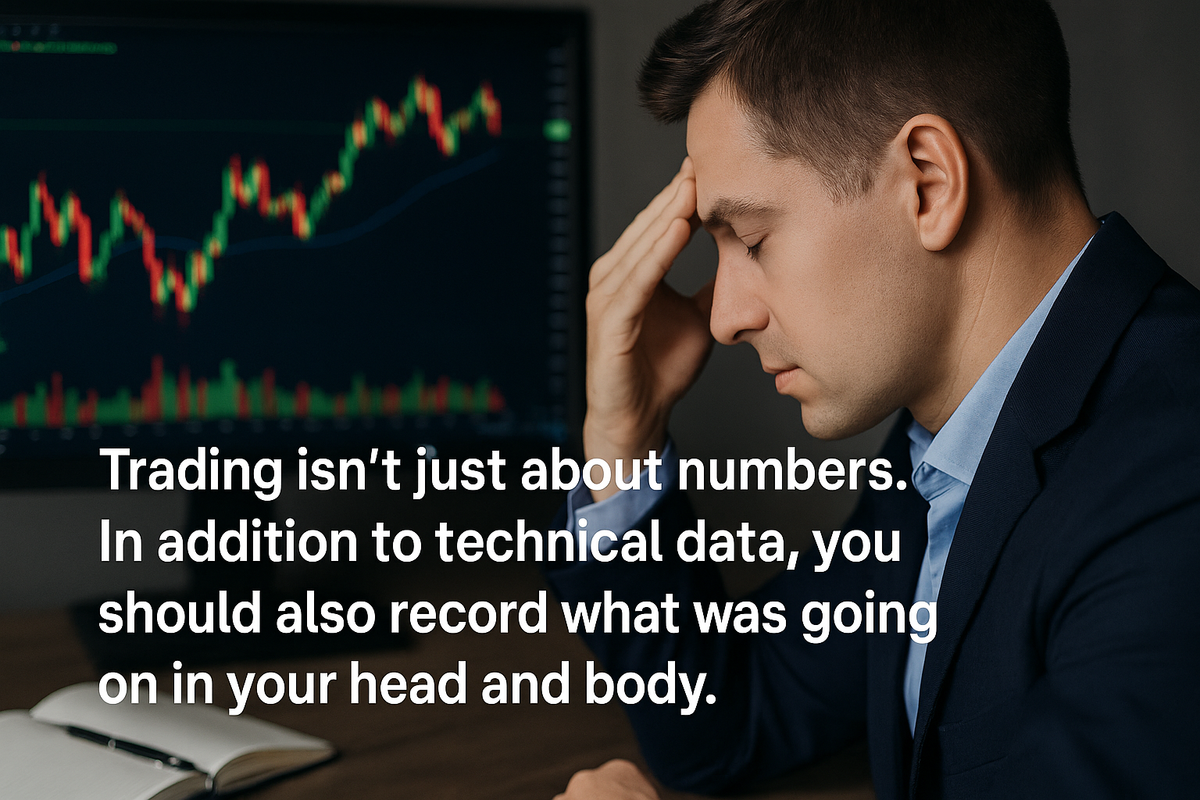
Trading is not just about numbers. In addition to technical data, you should also record what’s going on in your head and body. Here is a basic list of what should not be missing from your diary:
- Setup: What was the input signal? What were your expectations?
- Result: Profit/loss in R-multiple (how many times you made/risked your risk).
- EmotionsA: How did you feel before, during and after the deal? Tense, calm, impulsive?
- ErrorsA: Did you follow the plan? Did FOMO intervene? Early withdrawal?
This combination of data allows you to uncover deeper patterns of behaviour and optimise not only your strategy but also your decision-making.
How to keep a journal: manually or digitally?
It’s up to you. Both options have their advantages.
- By handDescription : Writing by hand slows the mind and helps you reflect better. Many traders enjoy this particular ritual.
- Digitally: We have a trading diary built right into the platform. It allows for advanced statistics, charting and tagging of trades, uploading screens, emotions, etc.
Regularity is the key. It’s not about having a perfect system, but having a system that you actually use.
In the insights tab:
You can track these metrics:
- R-multiple: Instead of counting your profit in crowns, keep track of how many times you have earned relative to your risk.
- Winrate and risk-reward ratio: How many trades end in profit and what is the average risk/reward ratio?
- Performance by day and timeA: You may find that Mondays are not for you – or that you trade best in the morning.
- Errors and breaches of the planA: Keep a record of failures. They will help you grow.
- And much more…
Weekly and monthly review
At the end of the week (and month), take a moment to recap:
- How many deals have you done?
- What worked and what didn’t?
- Which mistakes were repeated?
- What can you do differently next week?
Simple questions, but huge impact. It will allow you to constantly fine tune your approach and increase consistency.

Conclusion
A trading journal is not just a record of your trades – it’s your personal coach. It helps you understand yourself, identify your strengths and weaknesses and build steady performance. If you’re serious about trading, journaling should be as natural a part of your day as opening your charts.
Start simply. Just start. Your future self will thank you.