· By Kohout Jan
Monthly Business Plan = Your Advantage
If you want to succeed in trading for the long term, one of the most important things you can do is to start creating a monthly trading plan.
You may be thinking, “What’s the point of a plan if the market is different every day?”
And that’s why. Without a plan, you trade randomly – and randomness is definitely not a strategy.
In this article, I’ll show you why the plan is so important, what it should contain, and how to easily evaluate and adjust it each week.

1. Why plan at all?
A monthly plan gives you structure, clarity and most importantly, peace of mind.
Every morning you know exactly what situations you are waiting for, what your goals are and when to take a break.
Planning is not just about performance – it’s also a mental hygiene tool. It helps you focus on what works and filter out unnecessary noise and impulsive decisions.
2. What should your monthly plan include?
The plan does not have to be complicated, but it should be specific. Focus on these 4 areas:
- Objectives: Not only profitable. Include process goals as well – how many quality trades you want to make, how many days to keep a journal, how consistently you want to follow the rules.
- A-sets: Clearly define what your ideal business looks like. When do you enter? What must be met? What does the deal automatically exclude?
- Days without trading: Schedule breaks – whether due to mental fatigue or low volatility. Rest is part of the strategy.
- Mental readiness: How do you know if today is not a good day to trade? Identify your warning signs (e.g., fatigue, frustration, internal pressure).
3. How to track progress and adjust the plan?
A plan to write is one thing. Sticking to it and evaluating it regularly is another.
Once a week, ask yourself these questions:
- How many deals have I opened?
- How many of them were actually my A-sets?
- Did I trade according to plan – or was I driven by emotion?
Based on this, adjust your plan: strengthen what works and eliminate what holds you back. Trading is not static – your plan should evolve with you.
4. Practical plan template
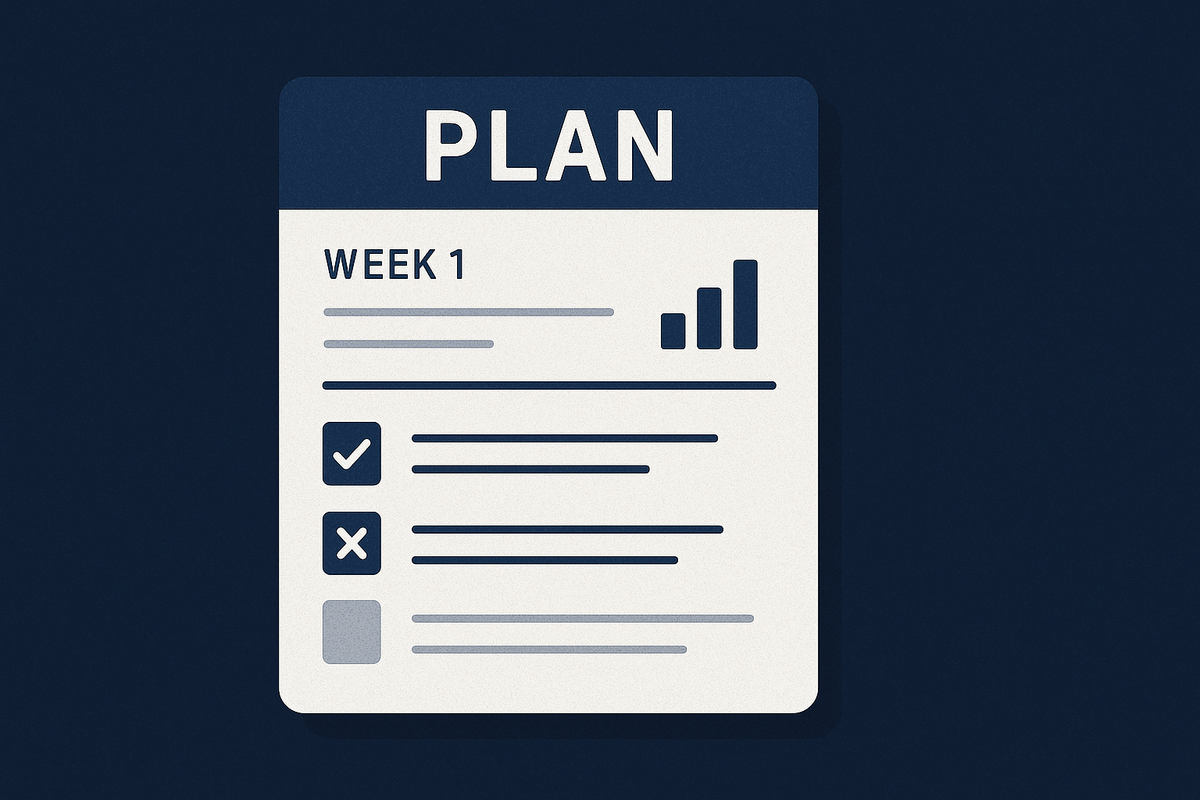
I recommend creating a simple template – for example in Notion, Excel or on paper. Divide the month into weeks and record each week:
- Summary of the objective
- Market notes (e.g. news, seasonal effects, expected volatility)
- To-do list: what to watch, what to edit
- Place for feedback at the end of the week
The whole system takes a few minutes a week – but its impact can be long-lasting.

Conclusion: plan as your advantage
A monthly plan is not a limitation – it’s a tool to protect you and move you forward.
It helps you trade with a clear head, knowing what you are doing and why.
Most importantly, it allows you to evaluate what really works.
If you don’t use the plan yet, start simple. And if you do – try to improve your plan by 10% each month.
Fingers crossed in your next month of business!