· By Kohout Jan
Price action as the language of the market


Price action is language. Every candle, every price movement is like a word in the story the market is telling. And as with any language – if you learn to read and understand it well, you will gain a huge advantage.
Learning price action does not mean looking for the holy grail. It means understanding the behaviour of the market at its most fundamental level – the level of pure price movement. Without noise, without unnecessary indicators, without delays.
Today, we will look at the basics of this approach together and show how price action can help your trading.
What is price action?
Price action (literally “price action”) is a method of market analysis that focuses purely on the movement of the price itself – i.e. how price changes over time.
It does not use indicators, oscillators or automatic signals. The entire analysis is based on observation:
- trends
- supports and resistances
- candle patterns
- market structures
- dynamics of price movement
Why is this important?
Technical indicators are derived from price and often have a lag. Price action allows you to monitor market developments in real time – exactly where decisions are made.

Basic elements of price action
Let’s break down some of the key elements we look for in price action:
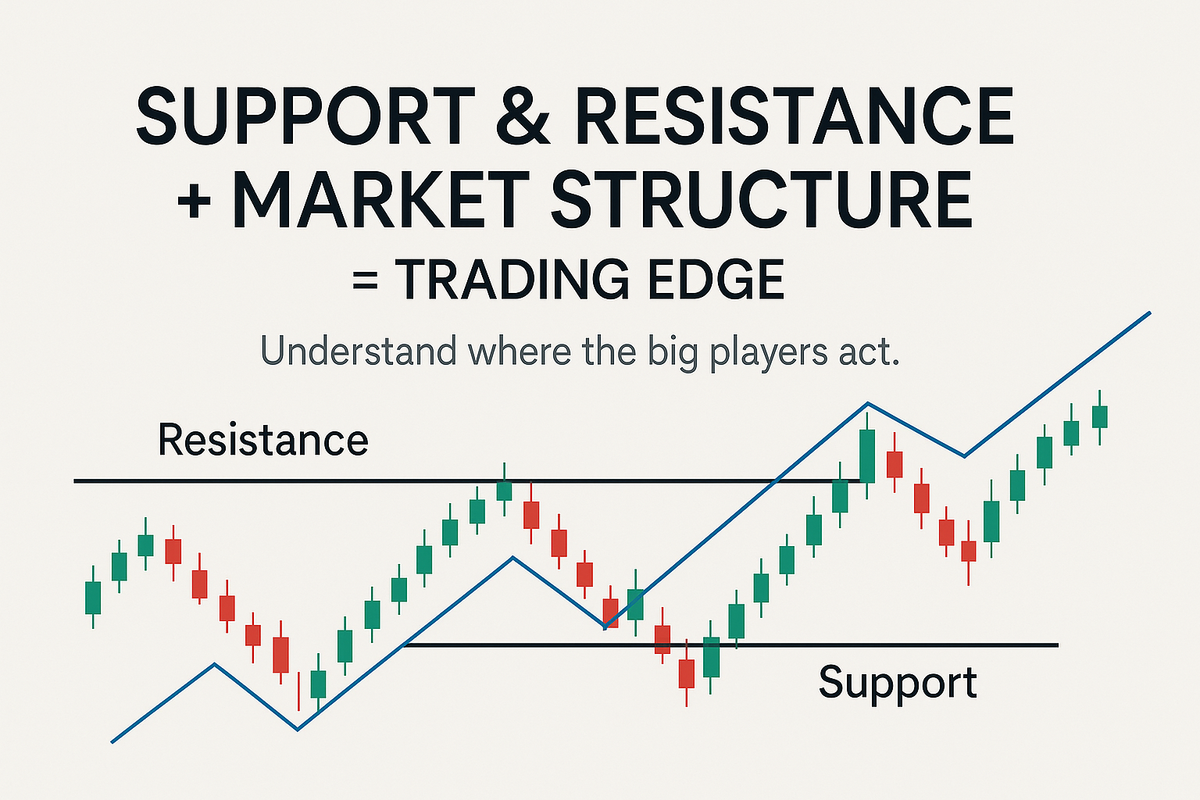
Support and resistance (S/R) levels
Every market has key price levelswhere price often reacts:
- Support – the level where the price bounced up
- Resistance – the level where the price bounced down
Why do these levels work? Because historically major players have entered here and these levels are perceived by other market participants. When price returns to them, there is a high probability of a reaction.
Example: if the price tests a strong support and forms a pin bar, it can be a signal for a long trade.
Market structure
The market is moving in cycles and waves. Understanding the structure of the market is essential to know what phase you are in:
- Uptrend: higher highs and higher lows
- Downtrend: lower lows and lower highs
- Range (consolidation): sideways movement between support and resistance
Following the market structure will help you avoid bad timing and unnecessary trades against the trend.
Candle Patterns
Price action in practice often uses candlestick formations as a signal to enter or exit the market. Some of the most used patterns:
- Pin bar: a candle with a long wick – indicates price rejection and potential reversal
- Engulfing pattern: one candle absorbs the previous one – a strong signal of a change in sentiment
- Inside bar: a candle inside the range of the previous candle – a signal of impending volatility expansion
It is important to perceive the context of the patter – where on the chart it originates and whether it is supported by market structure or S/R levels.
How to search for signal confluence
The candle pattern alone is not enough.
The power of price action comes in a combination of factors – called confluence.
Confluence means that at one place on the chart you will find a confluence of several signals:
- the price is at a significant S/R level
- Market structure shows potential turnover
- a strong candle pattern was created
- confirmation on a higher timeframe
This setup has higher probability of success than an isolated signal.
Why less is more – clean chart, clean head
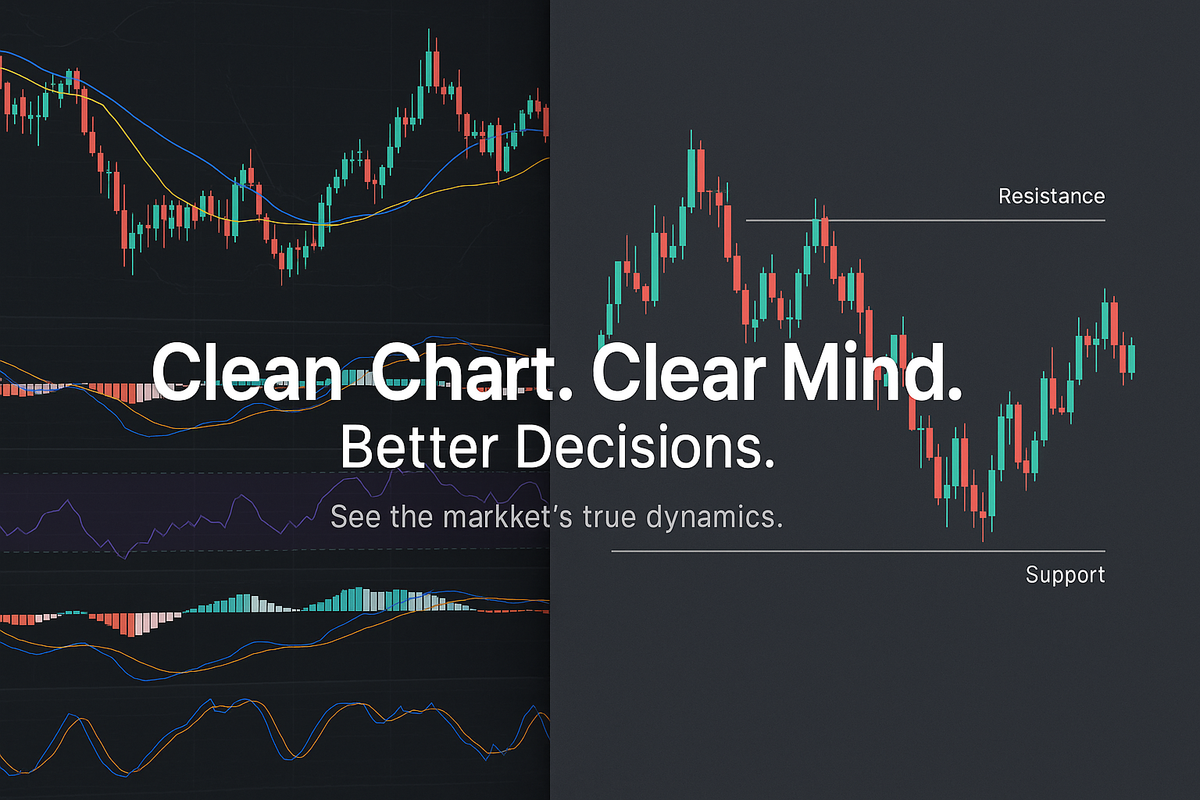
A very common mistake of beginners: overflowing chart.
MACD, RSI, Stochastic, moving averages… and the result? Chaos.
Price action teaches minimalism.
- One chart.
- Simple price analysis.
- Focus on key levels and market behaviour.
This way you “clear your head” and start to perceive the market dynamics themselves – not the opinions of the indicators.
Advantages of the price action approach
Faster response: you work directly with the current price
Flexibility: can be applied to any market and timeframe
Simplicity: fewer elements on the chart, better focus
Greater understanding of the market: You learn the real behaviour of market participants
The downside? Requires More experience and practice. It may be more challenging at the beginning, but it pays off in the long run.
Conclusion
If you understand price behaviour, you will be one step ahead.
Price action is not a trick – it’s a way to see and hear what the market is telling you.
And when you listen to it, you start trading in line with its rhythm, not against it.
Want to learn price action in depth? EverTrader can help you do just that. Follow our blog – we’ll show you how to read the market like a pro.
Interested in price action trading? Join the EverTrader community and get access to exclusive videos and articles.