· By Kohout Jan
Retail Trader vs. Prop Trader
Trading may seem simple at first glance: buy, sell, make a profit. But if you’ve ever tried to switch from retail trading to prop trading, you know that they are two completely different worlds. It’s not just about the amount of capital – the difference is all about mindset, how you manage risk and the type of psychological pressure you’re under.
In this article, we’ll look at the key differences between retail and prop trading – and why switching from one to the other can mean a major change in your trading career.
Capital: your money vs. other people’s money
Retail trader: equity, emotions
A retail trader trades with the money he has earned. Maybe it’s $500, maybe it’s $50,000. But it’s his. And that’s what creates the emotional attachment to every open position.
- The loss hurts twice as much because you realize it was your own money.
- You tend not to take good deals because you’re risk-averse.
- Conversely, sometimes you risk too much because you want to “grow up fast”.
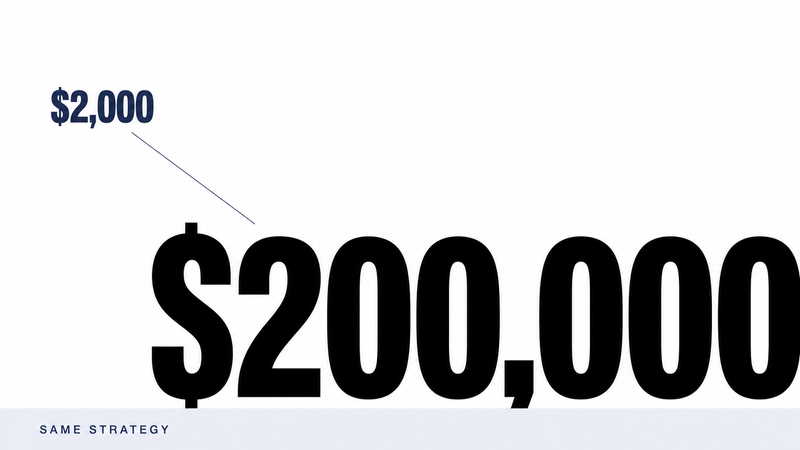
For example, a trader with a $2,000 account may put 10% of the account on one trade because he has “nothing to lose” – until he really loses the whole account.
Prop trader: foreign capital, higher liability
As a prop trader, you work with someone else’s capital – often 10x or 100x more than you could afford on your own. That sounds tempting, but it comes with responsibility.
- There is no emotional attachment to money – but strict rules that you have to follow.
- You have to handle drawdown limits, risk management and profit targets.
- One overshot trade and the account is gone.
Example: many prop firms offer a $100,000 account with a max 5% daily drawdown rule. So if you lose $5,001 during the day – even if it’s just due to a technical error – your account can be closed.
Mindset: gambler vs. professional risk manager
Retail trader: quick profit, chaotic approach
Many retail traders approach trading with the idea of “getting rich quick”:
- They chase the “perfect setup” and often enter late.
- They are overbuying because “something has to go”.
- After a loss, they immediately try a “revenge trade” to make up for it.
- They’re only focusing on that, how much they could makeinstead of dealing with risk.
This mentality is addictive, but leads to constant fluctuations in performance – and often frustration.
Prop trader: plan, discipline, long-term thinking
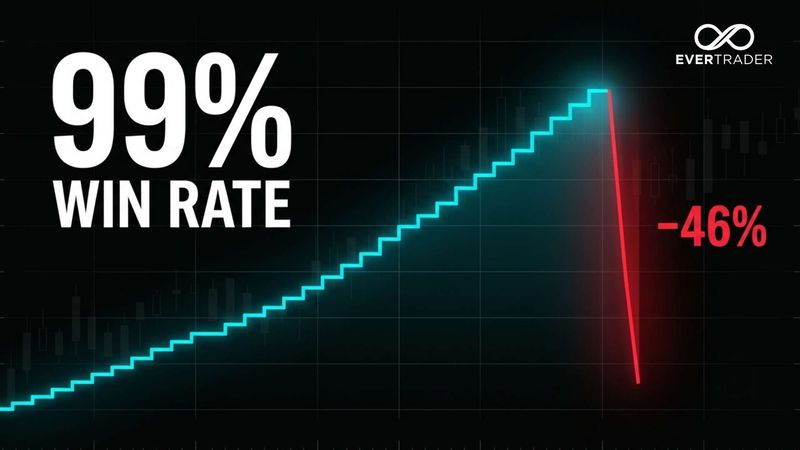
On the other hand, a prop trader understands that his job is not to make the most money in a week, but to to survive and grow over the long term.:
- Each store has a predetermined entry, stop loss and take profit.
- Adheres to a clear strategy regardless of the mood of the moment.
- He knows that one profitable deal means nothing – what matters is the result in 100 trades.
Example: a prop trader would rather make 20 trades with a +1R profit than one with a +10R profit because he knows that consistency beats volatility.
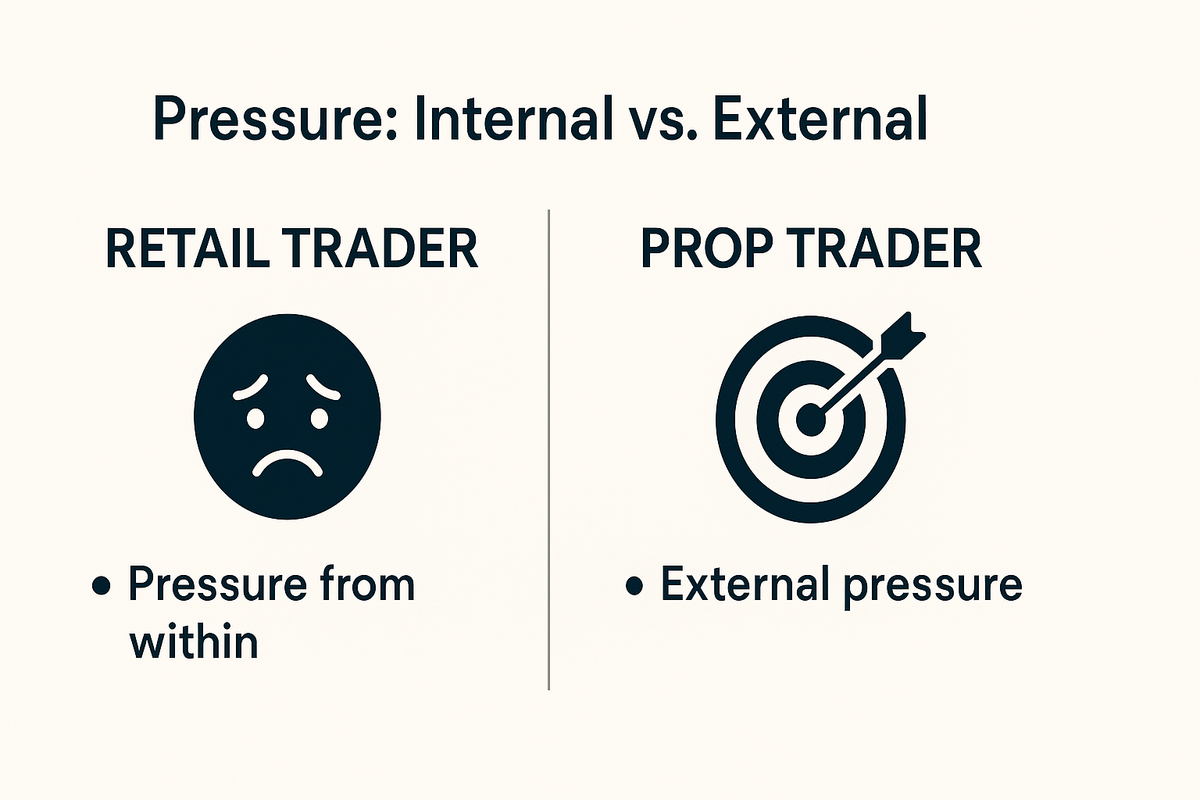
Pressure: internal vs. external
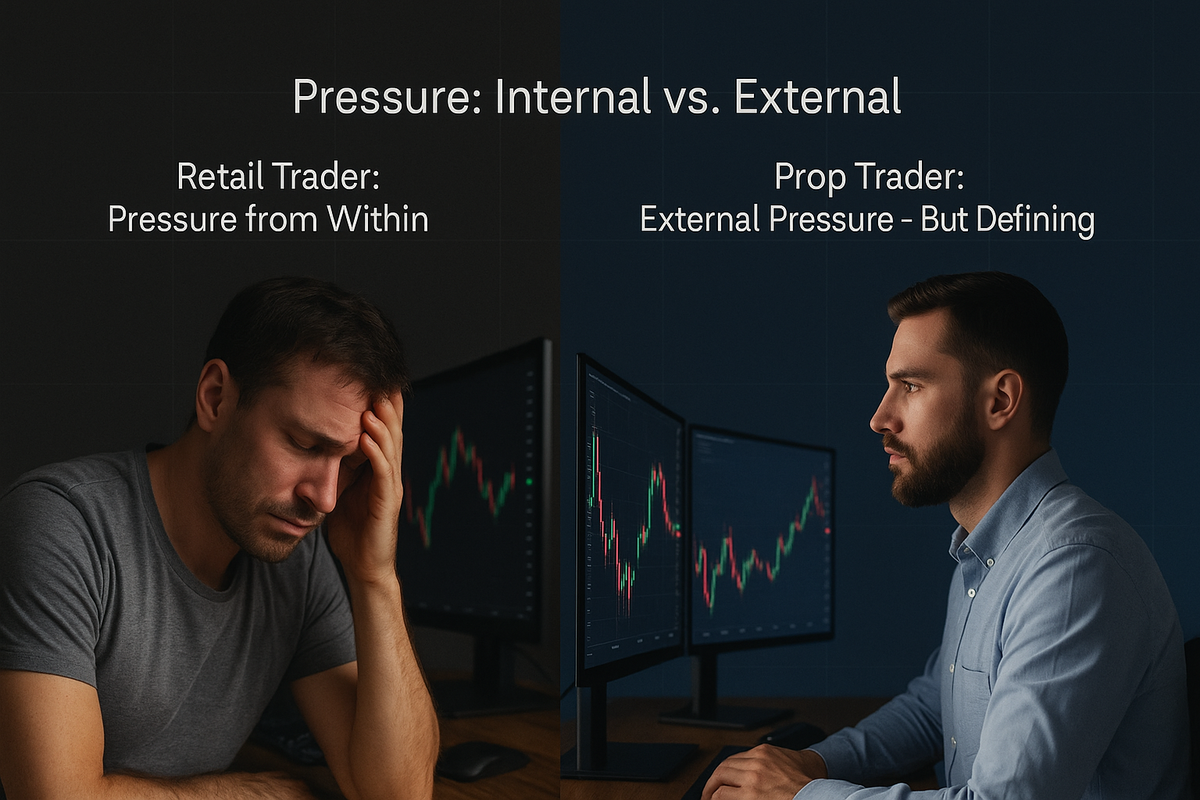
Retail trader: pressure on yourself
Retailers often put enormous pressure on themselves:
- “I have to make the most of this position.”
- “I can’t afford another loss.”
- “I want to prove to myself that I can do it.”
The result is fear, hesitation, skipping strategies – and most importantly, emotional decision-making.
Prop trader: external pressure – but formative
For prop traders, the pressure is external, but at the same time well-defined:
- You have to meet performance targets.
- Comply with company rules.
- Keep the drawdown below the limit.
- Knowing that one mistake can cost you the entire bill.
Example: a Prop firm can ask you for a 10% profit within the evaluation period – without breaking any rules. Is this stressful? Yes. But it’s also a school of discipline and consistency..
Conclusion: business as business, not a game
Let’s recap:
Retail trading is emotional, uncontrolled and often chaotic.
Prop trading is structured, professional and result-oriented.
The difference is not just capital – it’s, it’s how you think, plan and follow the rules.
To succeed as a prop trader, you need to stop playing the odds – and start thinking like a risk manager. If you can do that, you’ll gain access to more capital, a clear structure and – most importantly – a new level in your trading career.