· By Kohout Jan
Take your TRADING to the next Level!
How to combine technical and fundamental analysis for better trading
In the trading world, there is often a debate about whether technical or fundamental analysis is better. Each approach offers unique perspectives on market movements, but combining them can create a powerful strategy that improves decision-making and consistency. In this article, we will look at the advantages and disadvantages of both approaches and show how they can be effectively combined.

Technical analysis: the science of price movements
Advantages:
- Data-driven decisions – Technical analysis uses historical price data and patterns, allowing for objective market analysis.
- Timing entries and exits – Charts and indicators help traders determine the ideal moments to enter and exit trades.
- Short-term focus – Ideal for day traders and swing traders who benefit from fast price movements.
- Widely recognized strategies – Technical tools such as moving averages, supports and resistances or trend lines are universally used.
Disadvantages:
- Delayed indicators – Many technical tools reflect past data, which may not always accurately predict future movements.
- Market noise – Short-term fluctuations can generate false signals, leading to unnecessary trades.
- Does not take into account economic factors – Technical analysis does not take into account actual economic conditions that may affect long-term trends.
Fundamental analysis: understanding the value of the market
Advantages:
- Long-term view – Analysing economic indicators, company performance and market conditions provides a broader understanding of asset values.
- Identify undervalued or overvalued assets – Helps traders recognize opportunities where prices do not reflect true value.
- Greater confidence in trading – A strong fundamental thesis can reduce emotional decision making and increase confidence in trades.
- Better risk management – Understanding macroeconomic conditions helps mitigate exposure to unexpected events.
Disadvantages:
- Slow to translate into prices – Fundamental changes take longer to be reflected in asset prices, reducing the usefulness for short-term trades.
- Complexity of analysis – Requires study of various factors such as financial reports, industry trends and macroeconomic data.
- Tougher timing of trades – Even if an asset is fundamentally strong or weak, the market may not react immediately, which can cause delayed price movements.
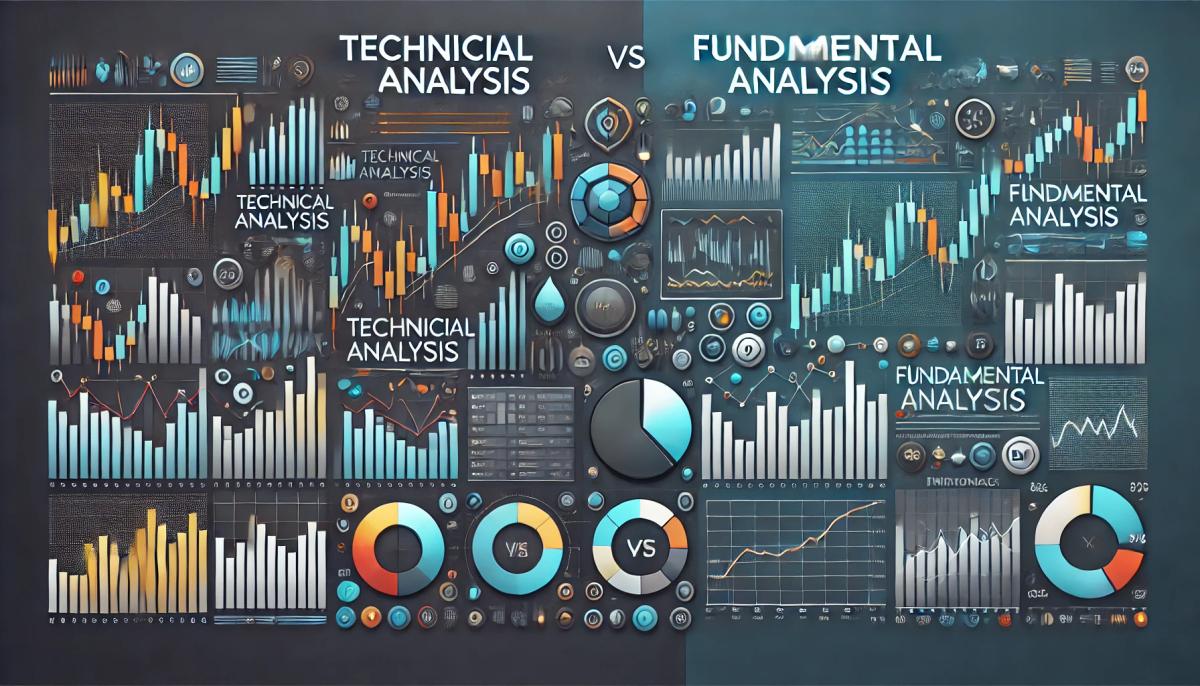
Combining technical and fundamental analysis: a balanced approach
Rather than choosing between one approach or the other, successful traders often combine both approaches to maximize their strategy. How to do it?
1. Using fundamental analysis to identify opportunities
Start with fundamental analysis and select assets with high growth potential or those that are undervalued. This will give you a solid trading view.
2. Application of technical analysis for entering and exiting trades
Once you identify an interesting asset, use technical indicators to fine-tune entry and exit points. For example, if a fundamentally strong stock is rising, wait for a technical breakout before entering the trade.
3. Risk management using both methods
Fundamental analysis helps assess overall market conditions, while technical analysis can signal when a trend is reversing. The combination of both methods allows for more effective risk management by combining macroeconomic insights with price trends.
4. Adapting to market conditions
Market conditions are constantly changing, so a hybrid approach will ensure flexibility. During volatile periods, technical analysis may be more useful, while in stable markets, fundamentals may be a stronger guide.
Conclusion
Both technical and fundamental analysis have their strengths and weaknesses, but together they form a comprehensive trading approach. By combining the predictive power of technical tools with the market insight of fundamental analysis, traders can improve their decision-making and gain a greater advantage in the markets.
At EverTrader, we believe that developing a comprehensive strategy that incorporates both approaches will help traders remain flexible and informed in any market environment.