· By Ondrej Kavalek
Trading is not gambling – at EverTrader we are looking for traders who rely on consistency

At EverTrader, we believe that trading is not a matter of luck or chance. Success in trading requires discipline, skill and above all a consistent approach. To support this principle, we have introduced new anti-gambling rules that aim to eliminate undesirable practices and promote professional traders. These measures will only affect a small percentage of traders, but they play a key role in maintaining a fair and sustainable environment for all.
Consistency – the cornerstone of success
Successful marketers have one thing in common – consistency. The ability to repeatedly make profits and effectively manage risk sets professionals apart from those who approach trading as a gamble. At EverTrader, we are looking for just such traders who know that success lies not in one-off risky bets, but in long-term strategy and discipline.
At the same time, we understand that becoming a professional trader is a process that takes time. That’s why we offer our clients not only the education and tools they need, but also opportunities to grow and develop. If you have the desire to work on yourself, we are happy to support you on the path to your business goals.
A gambling approach in trading? Not with us!
In the dynamic world of prop trading, we sometimes encounter traders who see trading as an easy way to get rich quick. They bet large sums on one-off positions in the hope of getting a hit, and if they are unsuccessful, they repeat their attempts. This approach is more akin to casino gambling than responsible trading.
Our goal is to protect not only our company but also our clients from these practices. We want to work with traders who have the potential to become part of our long-term plans.
How do anti-gambling rules work?
Our rules are designed to allow disciplined traders to trade without restrictions, while eliminating inappropriate behaviour. Some of the practices we do not encourage include:
Excessive use of leverage – Overleveraging
One of the common risky approaches practiced by traders is called overleveraging. This approach is based on the idea that by opening larger trading positions, high profits can be made more quickly. Unfortunately, the reality is that larger positions not only bring more stress from potential losses, but also negatively affect the trader’s psyche, which often leads to mistakes.
Excessive use of leverage also limits the trader’s flexibility. The maximum daily loss condition should always be kept in mind on accounts. Any position that is too large means an increased risk of exceeding this limit in adverse market developments. As a result, the trader has to shorten his stop losses or give up the opportunity to open other, potentially profitable trades.
Revenge trading, a situation where a trader tries to make up for a series of losses with one big trade, also carries similar risks. In this case, however, the psychological state is often unbalanced, leading to trading outside the strategy, without proper risk management and with a low probability of success. In addition, there is again the risk of violating the set conditions.
A similar problem can arise when a trader is doing well and after a series of successful trades he or she gets the impression that larger positions will bring even larger profits. However, financial markets can be unpredictable and such an approach often leads to excessive losses and again increases the risk of breaking the rules with your EverTrader Verification.
Responsible trading, based on adherence to strategy and proper risk management, is the key to long-term success. Therefore, we recommend avoiding reckless overtrading and focusing on a systematic and consistent approach that will allow you to reach your full trading potential.
Overexposure
Some traders try to diversify risk by trading more instruments. However, this may not always work as expected. Even if a trader opens multiple positions on different instruments or currency pairs, it may be the case that he or she is actually exposed to increased risk on one currency or instrument. A typical example is trading several major currency pairs where all positions may be dependent on the movement of the US dollar. Instead of true diversification, it is one big bet on this currency.
A similar risk may arise when increasing or decreasing positions. Imagine a situation where you catch a trend and, with growing optimism, continually increase your position to maximize your potential profit. But is this really the right approach? In the end, it is still the same trading idea. The question is whether such behaviour is consistent with the rules of risk and money management.
Another danger is opening positions so large that they use up all the potential available margin. While technically the account allows this, it is not a safe approach from a risk management perspective. This is true even if stop losses are entered. Experienced traders know that markets are not completely predictable – situations such as slippage, order execution at a different value, sudden price fluctuations, gaps or flash crashes can occur. Therefore, you cannot rely on a guarantee that an order will be executed exactly as specified.
Large positions, or even combinations of multiple positions open at the same time, can be extremely risky. At EverTrader, we believe that it is always better to take a conservative approach and control risk than to trade with volumes that even the big players cannot afford. Professional traders usually risk only 1% of their capital, which allows them to make interesting profits in a safer and more stable environment. This approach also allows them to maintain long-term consistency and minimise the impact of unpredictable market situations.
Remember that less is sometimes more. Excessive risk taking can lead to an early exit from your business career, while a conservative approach allows you to grow and build a solid foundation for long-term success.
One-sided betting
Opening one large position on a single instrument can be a form of gambling. It can also include successive buying into profitable positions or, in the worst case, increasing positions at a loss. Such behaviour, which we have already mentioned, can quickly get a trader into big trouble.
If the first open position already exceeds the limits of reasonable risk management, further additions are a clear sign of a gambling approach. Yes, it may seem that increasing positions on a profitable trade in a strong trend can be an effective strategy. But can you really be sure that the trend will last as long as you assume?
In the case of losing positions, the situation is even worse. The idea that the market will turn around and everything will get better only leads to increased stress and increased potential losses. The result can be a big hit to the trading account, which the trader will be correcting for many months.
Such behaviour cannot be described as professional trading. A real trader has a clear strategy that he uses repeatedly day after day, month after month. His success lies in long-term consistency, not in random bets on a single event.
Such one-sided bets are often associated with high risk, for example when a trader pin his hopes on the outcome of a single macroeconomic report or other market event. While markets may move in one direction, which may result in a profit once, the same approach will usually not work the second or third time. Risking your entire available resources on one opportunity is unnecessarily risky and makes little sense.
This behaviour is reflected in any Verification process. It only shows that the trader tends to take high risks, which is not the basis for a strategic and long-term approach.
Let’s take an example. Imagine a trader who bought shares in a technology company at the beginning of its boom and sold them at the peak. Even though he made good money, does that mean he is a consistent trader? It doesn’t.
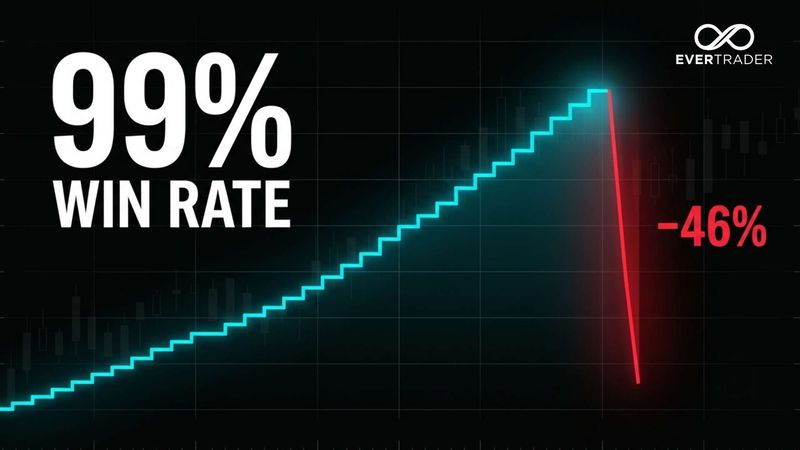
Similar stories fill the media whenever the market is peaking. But as soon as there are significant downturns, such as during the market corrections of recent years, the stories of “billion-dollar profits” disappear as quickly as the market’s growth. Instead, reports of luxury asset sales abound as traders who risked everything try to salvage their finances.
This style of trading has nothing to do with a professional approach. If you hold assets for several years, you are investing rather than trading. Conversely, betting everything on one card is a strategy more suited to the casino than the financial markets. If you are looking for the thrill of gambling, the casino is the place for you. However, if you want to become a successful trader, avoid these mistakes.
Account rolling
Another phenomenon that appears in the environment of prop trading companies is the so-called account rolling. This is a situation where traders purchase several Verification Processes at the maximum allowed amount, successfully complete them, but due to the limits of the maximum allocation per trader or strategy, they cannot combine or use these accounts at the same time.
This may lead to the assumption that one can open high-risk trades on the first executed account with the feeling that any losses will be covered by the next account that is already ready to trade. However, such an approach denies the very essence of serious trading and a long-term sustainable trading strategy.
At EverTrader, we encourage exactly the opposite approach – patience, responsibility and building long-term stability. Our goal is for traders to grow with us. We offer a progressive account increase program where you can receive an increase in trading capital every four months, while also improving your payout ratio terms on your first successful increase.
If someone repeatedly breaks the rules on individual accounts and “bets” rather than trades the plan, they are denying not only the purpose of our Verification Process, but also their own opportunity to become a professional. Such behavior is not indicative of the true quality of the trader or their strategy and is more likely to lead to losses in the long run.
Trading is not gambling. Our goal is to differentiate ourselves from the demonization that sometimes accompanies trading. Remind yourself why you started – was it for quick money or to find a steady and consistent income? Trading is a demanding discipline that requires not only knowledge and skill, but also responsibility and respect for risk.
Fulfillment Verification with a single trade
We would like to bring to your attention another practice that sometimes occurs with Account Verification. Some clients can be very aggressive in reaching a profit target on a single trade or trading opportunity. Subsequently, in order to meet the minimum trading day metric, they will open only one or two trades with a minimum volume of, for example, 0.01 lots over the next two days.
While this tactic may lead to compliance, it is not an approach we at EverTrader support. Our goal is to work with traders who focus on long-term sustainable strategies, have a well thought out trading plan and understand the importance of a systematic approach to trading.
Trading is about consistency, discipline and responsibility. A one-off success on a single trade can be random, while a strategy that relies on regularity and robustness delivers long-term results. This approach distinguishes serious professionals from those who bet on luck or look for shortcuts.
We believe that trading is not about quick wins, but about building skills that will allow you to thrive in the financial markets for years to come. Let’s work together to make EverTrader a place where traders focus on growth, development and long-term success.
What restrictions may occur?
As part of our philosophy of promoting long-term sustainable trading and responsible risk management, we have put in place a number of key rules and restrictions that should help you minimise losses and support your trading success should we identify any of these practices.
1. Mandatory use of stop-loss and risk limitation
Stop-loss is an essential tool for protecting your capital. Therefore, we can make its use mandatory on every trade:
2. Limitation of maximum daily profit and loss
To maintain balance and prevent impulsive behaviour, we can also set limits on maximum daily profit and loss.
3. Reducing leverage
We may also introduce stricter leverage limits to ensure stable and responsible trading.
4. Maximum daily exposure limitation in lots
To ensure controlled risk, we can define a cap on the total volume of open positions during a trading day.
Even under these conditions, traders can continue to take their profits, but the trading method will, as mentioned here, be set up to reflect a professional approach.
5. Payout reduction
Our ReviewDesk bases Overexposure decisions on the margin level. If your margin level falls below 200%, our ReviewDesk may not recognize trades made during this period.
6. Termination of cooperation
Serious violations of this policy may result in termination of your account and cooperation, including loss of access to the Services.
Rules that won’t limit the majority
If you trade systematically and follow basic principles such as stop-loss, take-profit or proper risk management, you don’t have to worry about these rules. They are designed to protect the integrity of our platform and encourage the growth of responsible traders.
Trading is constantly evolving and so are our services. We believe these measures will help create a fairer and more sustainable environment in which you can grow and achieve your goals.
Trading is not gambling. With us, you can focus on what’s important – consistency, strategy and long-term success.