· By Kohout Jan
TRADING STRATEGIES YOU NEED TO KNOW!
Prop trading offers traders the opportunity to trade with a company’s capital instead of their own funds. This can mean greater opportunities for profits, but also the need to adhere to stricter risk management rules. What trading strategies are best suited for prop trading and which ones work within EverTrader? We’ll take a look at the most effective approaches and the differences between prop trading and proprietary trading.

Overview of Trading Strategies
Swing Trading
Swing trading is a strategy based on holding positions for several days to weeks in order to take advantage of larger price movements. It uses technical analysis, supports and resistance to determine entry and exit points.
Who is it suitable for?
- Traders who can’t follow the markets all day.
- Those who prefer a lower frequency of trades and larger targets.
Scalping
Scalping is an ultra-short-term strategy where a trader enters and exits positions in tens of seconds to minutes. The goal is to capitalize on small price movements with a high frequency of trades.
Who is it suitable for?
- Traders who react quickly and have strong focus.
- Those who want to capitalize faster on intraday volatility.
Day Trading
Day trading means opening and closing positions during one trading day. This strategy uses intraday volatility to make profits.
Who is it suitable for?
- Active traders who want to maximize daily profits.
- Those who want to avoid holding positions overnight.

Which Strategies Work Best in EverTrader?
EverTrader supports traders who use strategies based on disciplined risk management. The most appropriate approaches include:
- Day Trading with a fixed risk-reward strategy – Short-term trades with clearly defined stop-losses and take-profits.
- Swing Trading in line with risk management – Compliance with maximum drawdown and position size.
- Scalping with a precise execution system – Use of fast entries and exits in accordance with the company’s prop rules.
EverTrader provides traders with tools for efficient execution, risk monitoring and strategy optimization.
How Does Prop Firm Trading vs. Equity Trading Differ?
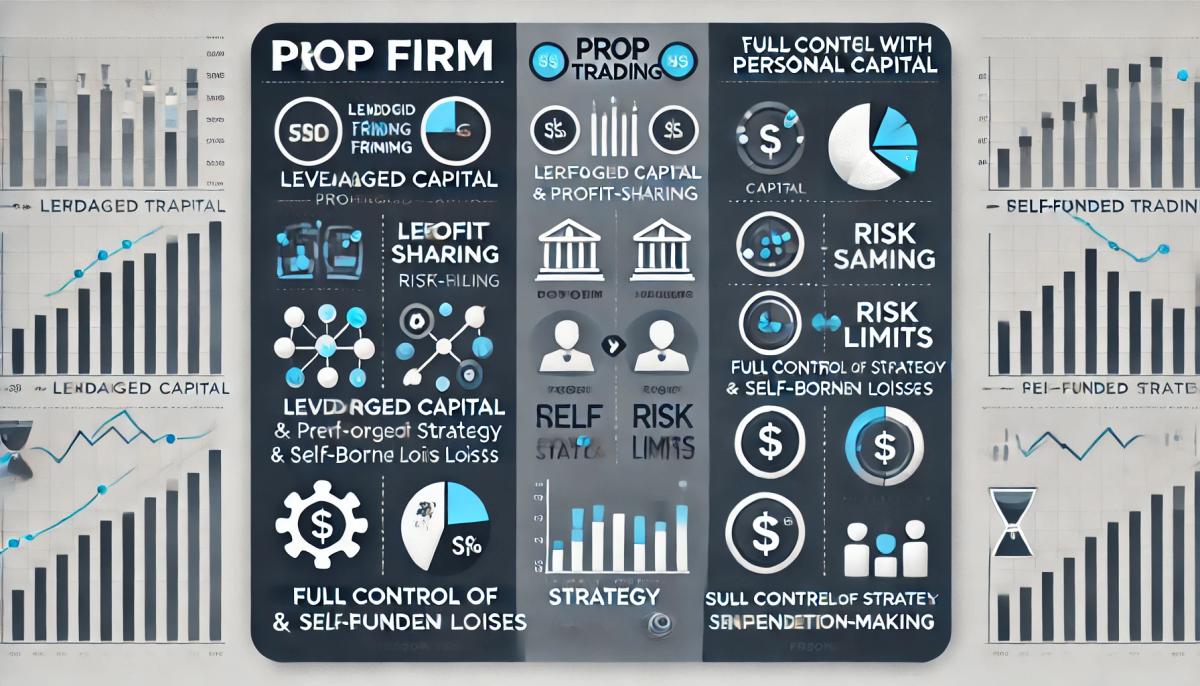
Trading with Prop Firm
- You use the company’s capital, which allows for higher trading volumes.
- You must follow the rules of the company, such as the maximum drawdown or limit on losses.
- You share in the profits, usually at a ratio of 80-90% for the trader.
Equity trading
- You have full control over the risk management strategy and rules.
- You must cover any losses from your own funds.
- All profits are yours, but you are also fully responsible for the risks.
Conclusion
Every trading strategy has its advantages and disadvantages, but in prop trading, adherence to solid risk management and discipline is key. EverTrader supports traders in building a profitable approach and offers tools for successful trading of the firm’s capital. Whether you prefer swing trading, day trading or scalping, the key to success is effective risk management and a solid strategy.
Will you join a network of more than 3000+ satisfied traders?